There are some mornings when everything feels rushed. Shoes are half on. Backpacks are still open. You’ve asked more than once. The clock is moving quickly, and it can feel hard to keep things on track. If this sounds familiar, you are not alone. Many families experience this, especially during busy morning routines. Sometimes, what we are seeing is something called processing speed.
What is processing speed?
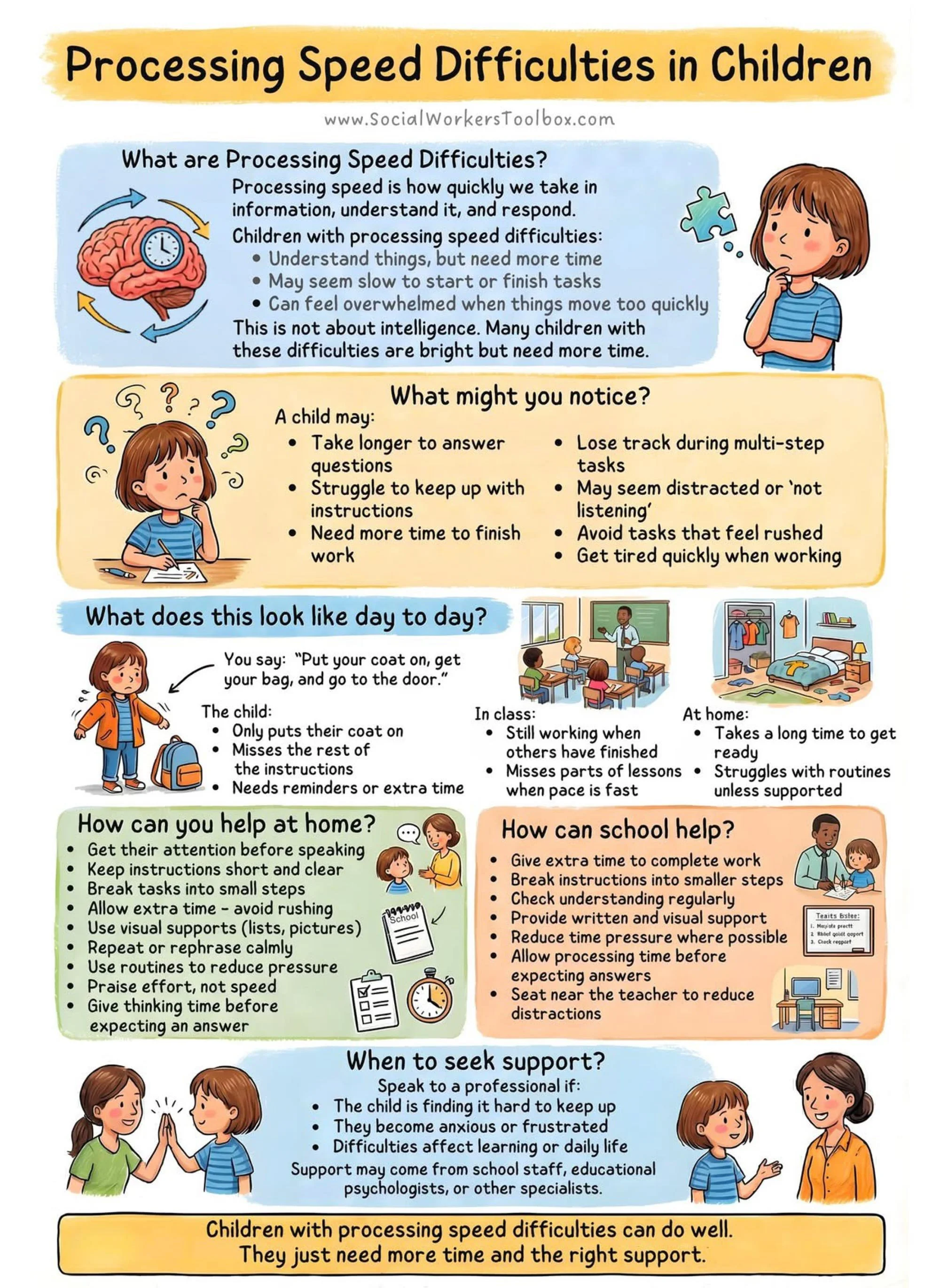
Processing speed is how quickly the brain takes in information, makes sense of it, and responds. Some children move through this process quickly. Others need more time.
Children with slower processing speed often: Understand what is being asked and want to follow through but need a bit more time to get started or complete tasks. This is not about intelligence. Many of these children are bright, thoughtful, and capable. Their minds are often taking in a great deal, and they benefit from having the time to work through it.
Children who need more time can sometimes feel a step behind, especially in fast paced moments like getting ready for school or keeping up with multi step directions. When the pace around them is quick, they may feel pressured to hurry, unsure where to begin, and frustrated that things are not coming together easily. Over time, some children may begin to feel discouraged or doubt themselves, particularly if they notice that others seem to move more quickly. By the time they arrive at school, they may already be carrying some of that stress with them.
What might be underneath the “slow”?
Children with slower processing speed may:
● Need extra time to shift from one task to another
● Have difficulty holding multiple directions at once
● Feel overwhelmed when there is a lot happening at once
● Appear distracted when they are still processing
It can sometimes look like:
● Not listening
● Forgetting steps
● Avoiding tasks
● Moving slowly
But often, what is happening underneath is simply that their brain needs a little more time to organize and respond.
When it comes to supporting your child at home there are small, practical shifts that can make a meaningful difference, especially during busy parts of the day.
● Slow the pace when possible. Even a small buffer of extra time can help reduce stress for everyone.
● Give one step at a time instead of multiple directions at once. Try offering one clear step and then pausing before the next.
● Get their attention before speaking. Moving closer, saying their name, and making gentle eye contact can help them take in what is being asked.
● Use visual supports. Simple checklists or picture routines can help children see what comes next without needing to hold everything in mind.
● Allow time to think. After giving a direction, a short pause can give your child the space they need to process and begin.
● Use calm, supportive language. Gentle reminders and neutral language can help keep the moment from feeling pressured.
● Prepare ahead when possible. Laying out clothes, packing backpacks, or planning ahead can make transitions smoother.
● Notice effort. Acknowledging effort, even in small steps, helps build confidence and motivation.
A gentle reframe
It can be helpful to shift from wondering why something is not happening more quickly to asking what support might help in that moment. This small shift often changes how we respond and how children experience the interaction.
When to seek extra support
If your child is consistently having difficulty keeping up, becomes frequently frustrated or overwhelmed and is struggling across multiple settings it can be helpful to connect with school staff or a specialist. Often, small adjustments and supports can make a significant difference.
Remember, children who take more time are often careful thinkers. They may notice details, reflect deeply, and approach tasks thoughtfully. In a fast paced world, they benefit from environments that allow for a bit more space and time. Our role is not to rush them, but to support them in a way that helps them feel capable and understood. With that support in place, they are able to grow, learn, and thrive in their own steady and meaningful way.
With care,
Kim Butler, Licensed School Counselor, LPC
Director of Mental Health Systems
kbutler@mountainsongschool.com